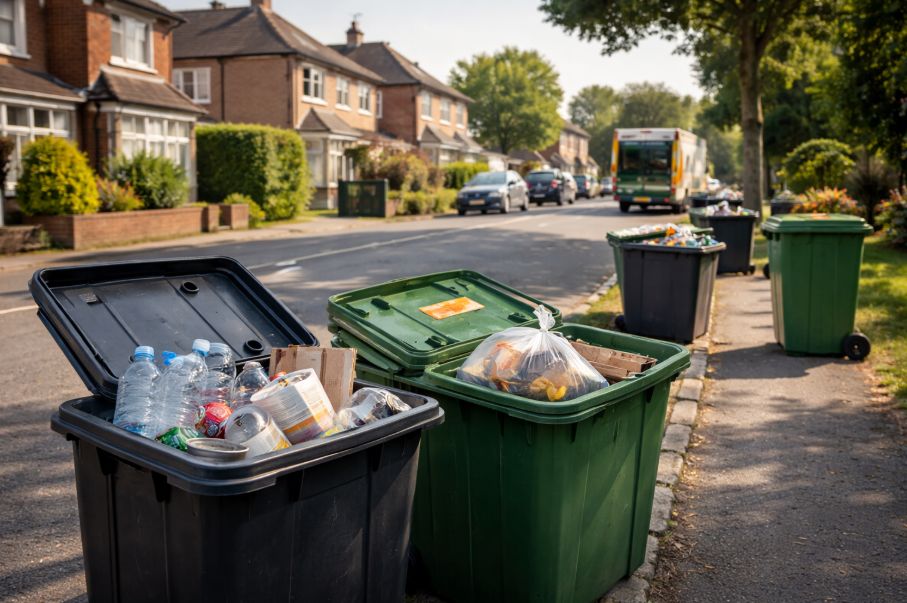
Yes, there are fines and penalties for not recycling correctly, and enforcement across the UK is becoming more visible as councils tighten controls on waste contamination. While many households still believe recycling errors are ignored, local authorities are increasingly intervening where bins are repeatedly misused. This shift is closely linked to rising processing costs, environmental targets, and clearer national standards under the england recycling rules 2026.
Rather than focusing on one-off mistakes, councils are mainly targeting persistent non-compliance that disrupts the recycling system as a whole.
Are UK Councils Actually Fining People For Recycling Mistakes?
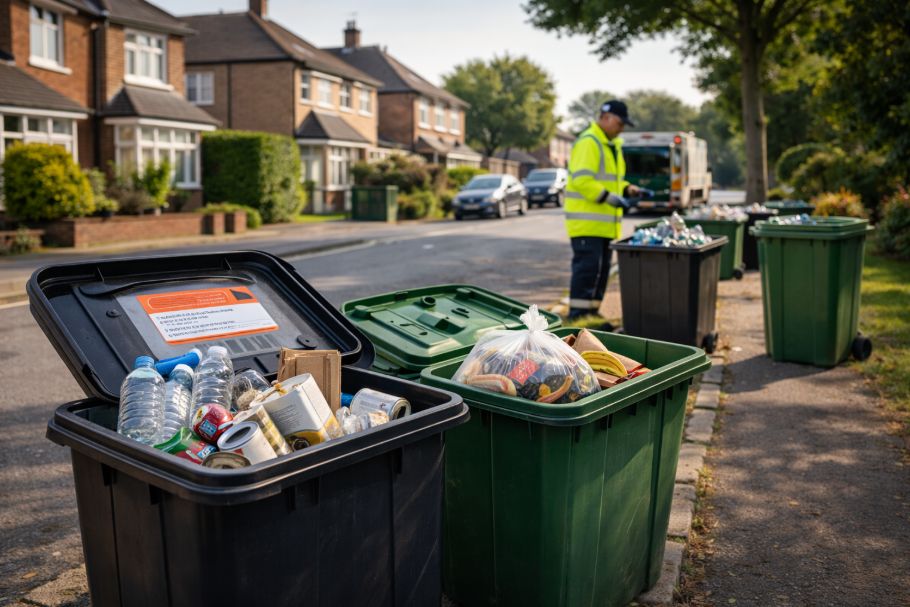
Yes, but most councils follow a gradual enforcement process.
Fines are rarely issued after a single error. Instead, councils usually start with warnings and education. However, if a household repeatedly places non-recyclable items into recycling bins, enforcement action can follow.
Local authorities already have legal powers under environmental legislation to penalise households for misuse of waste services. These powers are being used more often because recycling contamination remains one of the biggest barriers to improving recycling rates.
The key point is that enforcement is local, not national. Each council decides how strictly it applies penalties, which is why checking your local guidance is essential.
How Much Can You Be Fined For Not Recycling Properly?
The value of fines depends on the council and the severity of the offence.
| Enforcement Type | Typical Amount |
| Fixed Penalty Notice | £80 to £400 |
| Written Warning | No fine |
| Refusal To Collect Bin | No fine, but corrective action required |
Higher fines are usually reserved for repeat offenders who ignore multiple warnings. Despite online claims, there is no automatic nationwide £400 fine for putting the wrong item in your recycling bin. Councils must follow due process before issuing penalties.
What Is The Three-Strike Or Traffic Light System?
Many councils now operate a structured escalation process often described as a three-strike or traffic light system.
Although the wording varies, the principle is the same. The aim is to give residents opportunities to correct mistakes before any financial penalty is applied.
- First incident usually triggers a bin tag or advisory notice
- Second incident may result in a formal warning letter
- Third incident can lead to a fine or further enforcement
Some councils physically tag bins with coloured labels, while others rely on letters or digital records. This system allows councils to show that penalties are a last resort rather than a first response.
Can Councils Refuse To Collect Recycling Bins?
Yes, and this is often the most immediate consequence of recycling contamination.
If a recycling bin contains items such as food waste, nappies, plastic bags, or liquids, collection crews are usually instructed not to empty it. The bin is left with a sticker explaining why it was rejected.
Refusing collection prevents contamination from spreading to an entire vehicle load, which could otherwise be rejected by recycling facilities. For residents, this means sorting the bin correctly before the next collection.
While this is not a fine, it is a clear enforcement measure that often encourages compliance quickly.
Why Are Recycling Penalties Becoming Stricter?
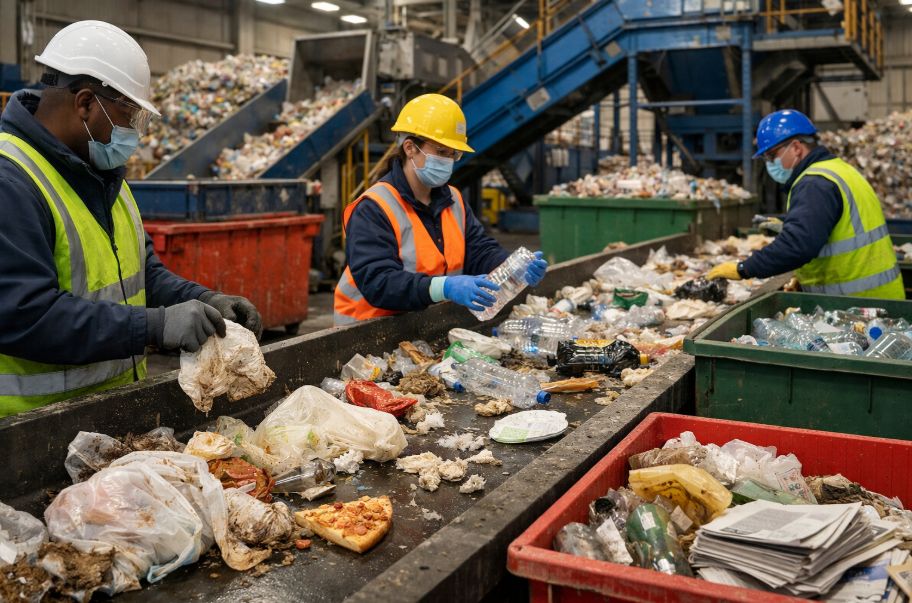
Are Contaminated Recycling Loads Costly?
Yes, contamination creates significant financial pressure for councils. When incorrect items are mixed in, entire loads may be downgraded or sent to landfill or incineration. This increases disposal costs and reduces income from recyclable materials.
These costs ultimately affect council budgets and local taxpayers, which is why enforcement is seen as necessary.
Are Environmental Targets Driving Enforcement?
National and local recycling targets play a major role. Councils are under pressure to reduce landfill use and improve recycling quality. Enforcement is one of the few tools available to change behaviour at scale.
Rather than punishing residents, councils argue that penalties help ensure the system functions efficiently enough to meet legal and environmental obligations.
Are There Safety Concerns?
Certain incorrect items pose serious risks. Batteries, aerosols, and electrical waste can cause fires at recycling facilities. Food waste and nappies also present health hazards for workers.
Stricter enforcement helps reduce these risks by discouraging unsafe disposal practices.
Do Recycling Rules Apply Differently To Businesses?
Yes, businesses face stricter and more immediate enforcement than households.
Under the government’s “Simpler Recycling” reforms, businesses must separate waste streams correctly, including dry recyclables and food waste. Failure to comply can result in enforcement notices and financial penalties without the same level of warning households receive.
| Area | Households | Businesses |
| Mandatory Separation | Varies by council | Required |
| Inspections | Limited | Regular |
| Enforcement Speed | Gradual | Faster escalation |
Businesses are expected to demonstrate compliance through contracts, signage, and staff training. Claiming uncertainty about the rules is less likely to be accepted.
Are New Recycling Fines Being Introduced In 2026?
No new nationwide, item-specific fines automatically begin in 2026.
Instead, 2026 marks a period of stronger and more consistent enforcement of existing powers, supported by clearer national standards. The england recycling rules 2026 are designed to standardise what can and cannot be recycled across England, reducing confusion.
With clearer guidance in place, councils are expected to be firmer with households that repeatedly ignore the rules, even though the legal basis for fines already exists today.
How Can Households Avoid Recycling Penalties?
Avoiding fines is usually straightforward once local rules are understood.
Most councils provide clear online guidance on accepted materials and common contamination issues. Regularly checking this information is important, especially as rules evolve.
Simple habits such as rinsing containers, keeping food waste separate, and never bagging recyclables unless explicitly allowed can significantly reduce the risk of enforcement.
Councils generally focus on repeat offenders rather than residents making genuine efforts to recycle correctly.
Is Recycling Enforcement About Revenue Or Compliance?

Councils consistently state that enforcement is not intended to raise money. In many cases, the cost of administering fines exceeds the revenue they generate.
Penalties are primarily a deterrent, aimed at reducing contamination and improving recycling efficiency. Without enforcement, councils argue that recycling systems would struggle to operate effectively.
As recycling standards become clearer and more uniform, enforcement is likely to feel more visible, but for most households, compliance remains achievable with basic awareness and care.
Conclusion
Recycling fines in the UK are not about punishing honest mistakes but about improving compliance and reducing costly contamination. While most households will only ever receive guidance or warnings, repeated misuse of recycling bins can now lead to refused collections or financial penalties.
With clearer standards and stronger enforcement linked to the england recycling rules 2026, understanding and following local recycling guidance is becoming essential. For most residents, simple habits and attention to council rules are enough to avoid penalties altogether.